How to start forex trading as a beginner in 2026 with a step-by-step plan
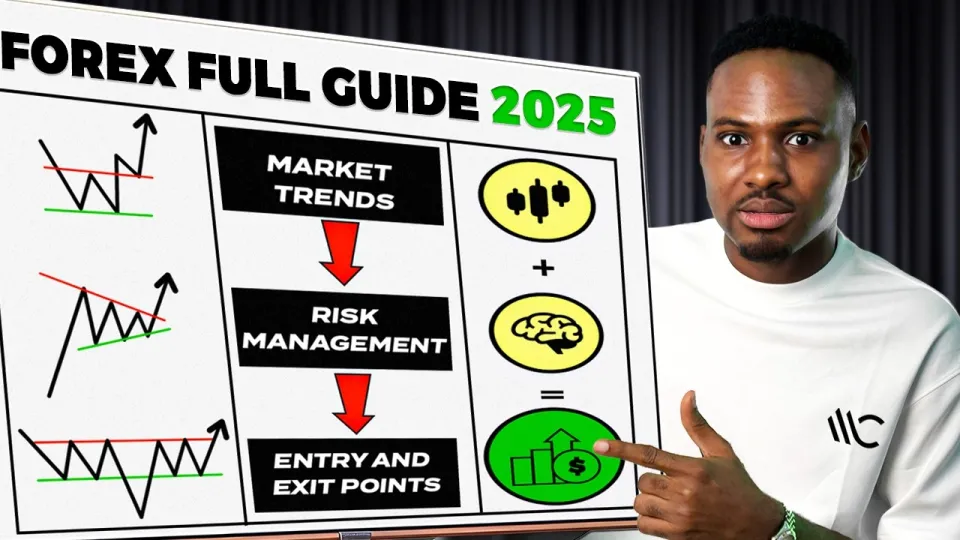
Video: How To Start Forex Trading For Beginners’ 2025 (Full Course)
Need articles like this for your video? They help promote it on YouTube and Google — order them in the Telegram bot @sat_sit_bot. The bot writes and publishes the articles itself (with your YouTube video embedded) on popular topical websites (no ads). Free trial — 50 articles.
Forex trading for beginners starts with three concrete steps: learn what currency pairs are and how they are quoted, open a demo account with a regulated broker, and practise a simple strategy with strict risk limits before risking real money. The full beginner path usually takes weeks of study and demo trading, not hours. A structured free course such as the one published by Jeffrey Benson Forex, with a companion student program at Fire Pips FX plans, can shorten the learning curve by putting the topics in the right order.
What forex trading is and how currency pairs are quoted
Forex is the global market for exchanging one currency for another, and every price you see is a ratio between two currencies. Currencies are always traded in pairs, such as EUR/USD or GBP/JPY. The first currency is the base and the second is the quote: EUR/USD at 1.0850 means one euro costs 1.0850 US dollars. The US dollar appears in about 88% of all foreign-exchange transactions, according to the Bank for International Settlements 2022 survey, which is why most beginner material starts with major pairs. The most liquid pairs — EUR/USD, USD/JPY, GBP/USD and USD/CHF — have the tightest spreads and the most reliable price action for learning. Exotic pairs such as USD/TRY or USD/ZAR can move violently on political news and are a poor first classroom.
How the forex market works across sessions and orders
Forex is an over-the-counter market with no central exchange, so trading moves around the globe as banks and brokers pass prices between time zones. It is open 24 hours a day from Sunday evening to Friday evening (UTC), split into four main sessions: Sydney, Tokyo, London and New York. Liquidity and volatility peak when London and New York overlap, which is typically the most active window for major pairs. Orders come in a few basic types: a market order fills immediately at the current price; a limit order waits for a better price; a stop order triggers once a level is broken. Every position also needs a stop-loss and, ideally, a take-profit level set in advance. Leverage is the other structural feature: a broker may offer 1:30 under European rules or far more offshore, which magnifies both gains and losses on the same account balance.
Tools and platforms every beginner needs before the first trade
A beginner's toolkit is small: a regulated broker account, a charting platform, a demo account and a trading journal. MetaTrader 5 (MT5) and TradingView are the two most common charting environments; MT5 also executes orders, while TradingView is stronger for drawing and backtesting ideas. A demo account lets you place trades with virtual money and should be used until you can follow a written plan for at least 20–30 trades without breaking rules. A journal — spreadsheet or notebook — records entry, exit, size, reason and emotion for each trade; viewers of beginner courses repeatedly note that writing while watching lessons is what makes the material stick. Free economic calendars and a news feed are also essential, because interest-rate decisions and inflation data move currencies more than any chart pattern.
A basic forex strategy foundation and how to place the first trade
A workable beginner strategy is built from three decisions: direction, entry and risk. Direction can come from a simple higher-timeframe trend filter, such as price above or below a 50-period moving average on the daily chart. Entry can be a pullback to a level or a candlestick signal in the direction of that trend. Risk is fixed before entry: decide the stop-loss distance in pips, then calculate position size so that a loss equals a set percentage of the account. For example, with a $1,000 account and 1% risk, the maximum loss per trade is $10; if the stop is 20 pips away, the position size is 0.05 lots on a standard pair. Placing the first trade then means selecting the pair, setting entry, stop-loss and take-profit, and confirming the order — then logging it in the journal. Many beginners find that the mechanical part is easy and the discipline part is hard.
Common beginner mistakes and risk rules that protect the account
Most beginner losses come from position sizing and psychology rather than from bad analysis. Risking 5–10% per trade means a short losing streak can wipe out the account; risking 1–2% keeps a string of ten losses survivable. Other frequent errors include trading during major news without a plan, moving a stop-loss further away to avoid being stopped out, revenge trading after a loss, and using maximum leverage because it is available. Overtrading is also common: more trades do not mean more profit, and each trade pays a spread. A simple rule set — one setup, one pair, one risk percentage, a daily loss limit — removes most of these mistakes before they happen.
Beginner questions answered from real viewer experience
Viewers of beginner forex courses often ask the same practical questions, and the answers are consistent. How long before trading live? Most educators suggest several weeks to a few months on demo, measured by rule-following rather than calendar time. How much capital is needed? Many brokers open accounts from $10–$100, but meaningful risk management with 1% risk per trade requires enough capital that a stop-loss is not a rounding error. Which broker? Regulation matters more than spreads: check the licence, the regulator and the client-fund protections. What about signals and copy trading? Copying trades can teach order flow, but it does not teach risk management, and a copied position still needs a stop-loss.
Useful links from the course
- Fire Pips FX student plans — the paid student program linked by the course author.
- Fire Pips free daily signal channel — one free trade idea per day on Telegram.
- Assex Markets registration — the broker sign-up link used in the video.
- Premium signal group bot — subscription entry point for the premium group.
Final thoughts on starting forex the right way
Starting forex as a beginner is a process of learning the market's structure, choosing tools you will actually use, and building a risk plan before the first live trade. The course by Jeffrey Benson Forex is a useful free roadmap because it moves from definitions to platforms, strategy and the first order in one sequence, and its student program at firepipsfx.com/plans is the paid next step for those who want structured guidance. Treat demo trading and journaling as mandatory, keep risk per trade small, and measure progress by rule-following rather than by a single profitable week. The traders who last are the ones who survive their beginner mistakes with capital intact.
Key takeaways
- Forex is a decentralized over-the-counter market where currencies trade in pairs; the US dollar is on one side of roughly 88% of all trades (BIS 2022).
- The market runs 24 hours a day, five days a week across four sessions: Sydney, Tokyo, London and New York.
- A beginner needs a regulated broker, a charting platform such as MetaTrader 5 or TradingView, a demo account and a written trading plan.
- Risk management is the core skill: many educators recommend risking no more than 1–2% of account equity per trade.
- The video course by Jeffrey Benson Forex covers the same progression from basics to first trade and is linked to a student program at firepipsfx.com/plans.
Source: How To Start Forex Trading For Beginners’ 2025 (Full Course) · Markdown version
Questions & answers
How much money do I need to start forex trading?
Many brokers allow accounts from $10–$100, but the practical minimum depends on your risk rule. If you risk 1% per trade and want a 20-pip stop-loss on a standard pair, you need enough capital for the position size to be meaningful without rounding to zero. Beginners often start on a demo account and fund a small live account only after proving they can follow a plan.
How long does it take to learn forex before trading live?
There is no fixed timeline, but most educators suggest several weeks to a few months on demo. The better measure is consistency: you should be able to execute 20–30 trades following your written rules without breaking them. If you keep moving stop-losses or oversizing, more time on demo is the answer.
Is forex trading risky for beginners?
Yes, leverage makes forex risky, and most retail traders lose money over time according to regulator disclosures. The main risks are position sizing, emotional decisions and trading during major news without a plan. Risking 1–2% per trade and using a stop-loss on every position keeps a losing streak survivable.
Can I copy trades instead of learning forex myself?
Copy trading can be a way to observe how a strategy behaves, but it does not teach risk management or market context. A copied position still needs a stop-loss and a size that fits your account. Most beginners benefit from learning the basics on demo first, then using signals as a supplement rather than a replacement for their own plan.